

Why Choose Us
Professional Team
Professional R&D and production experience of connectors,Has already acquired ISO9001, ISO14001 international quality,environment and management system certificates.
Competitive Price
Our competitive pricing ensures that our customers get the best value for their money.trying to reduce costs and profits,and provide you with a good price.
Quality Control
For each process,we have strict inspection standards,and we always insist that quality is life.
Online Response
We will wait for your message within 24 hours. Thank you for your interest in our products.
What is Wafer Header
A wafer header is a type of connector that is typically used in semiconductor manufacturing and testing. It is a flat, rectangular component that has a series of pins or sockets arranged in a grid pattern. The pins or sockets are designed to make contact with the pads on a semiconductor wafer, allowing electrical signals to be passed between the wafer and the testing or processing equipment. Wafer headers are used in a variety of applications, including wafer testing, wafer probing, and wafer level packaging. They are typically made from materials such as ceramic, plastic, or metal, and are available in a range of sizes and pin counts to meet the needs of different applications.





Product Categories


Benefits of Wafer Header
Secure and Reliable Connections
One of the primary advantages of 4-pin wafer connectors is their ability to establish secure and reliable connections. The male headers and female receptacles align perfectly, ensuring proper contact between pins and holes. This precision connection minimizes the risk of signal loss, intermittent connections, or accidental disconnections, thereby enhancing the overall stability and performance of electronic devices.
Compact and Space-Efficient Design
4-pin wafer connectors are renowned for their compact and space-efficient design. The small form factor allows for high-density packing of components on PCBs, making them ideal for devices with limited space, such as smartphones, tablets, and wearables. Their ability to accommodate more connections in a confined area enhances the functionality and design possibilities of electronic devices.
Easy Assembly and Quick Installation
Another significant advantage of 4-pin wafer connectors is their ease of assembly and quick installation. The plug-and-play design simplifies the assembly process, reducing production time and costs. Manufacturers can achieve efficient mass production and streamline their manufacturing workflows, contributing to faster time-to-market for electronic products.
Versatility in Application
4-pin wafer connectors offer versatility in application across various industries and electronic devices. They find use in consumer electronics, industrial automation, automotive electronics, medical devices, and more. Their compatibility with different PCB layouts and configurations allows engineers and designers to employ them in diverse applications, catering to various connectivity needs.
Semiconductor manufacturing
Wafer headers are commonly used in semiconductor manufacturing to connect individual semiconductor wafers together. The headers provide high-density interconnects between the wafers, allowing for efficient data transfer.
Data centers
Wafer headers are used in data centers to route data between servers, storage devices, and other network components. They provide a compact and efficient way to transfer large amounts of data in a small space.
Microelectronics
Wafer headers are essential for microelectronics, which require precise and high-density interconnects to function correctly. They are used in the production of sensors, actuators, and other microelectronics components.
Aerospace and defense
Wafer headers are used in aerospace and defense applications to connect avionics systems and other electronic components. They provide high-reliability interconnects that can withstand harsh environments and extreme temperatures.
Medical devices
Wafer headers are used in the production of medical devices, such as pacemakers and insulin pumps. They provide a reliable and precise connection between the electronic components within the devices.
Automotive
Wafer headers are used in automotive applications to connect various electronic components, such as sensors and control modules. They provide a high-density interconnect solution that can withstand the vibration and temperature extremes of automotive environments.
Types of Wafer Header

01
2.0mm Wafer Straight SMT Connector
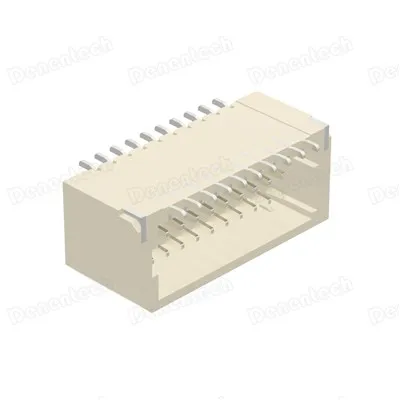
The 2.0mm wafer straight SMT connector is a wafer header connector with a pitch of 2.0mm. This category of products is a wire-to-board connector, which has a wide range of applications and a large demand in the market.

02
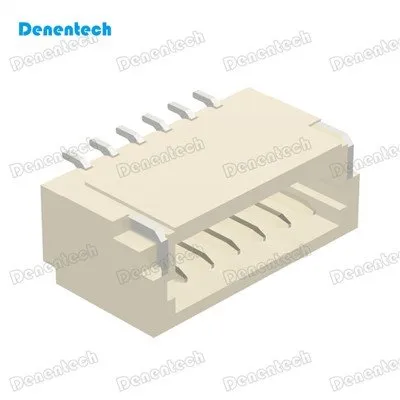
2.54mm 5P Wafer Header Connector
2.54mm 5P Wafer Header Connector is a wafer connector. The WAFER connector is a kind of wire-to-board connector. Most of its shells are white, and the number of PINs depends on the situation. Commonly used in home appliances and other electrical appliances.

03
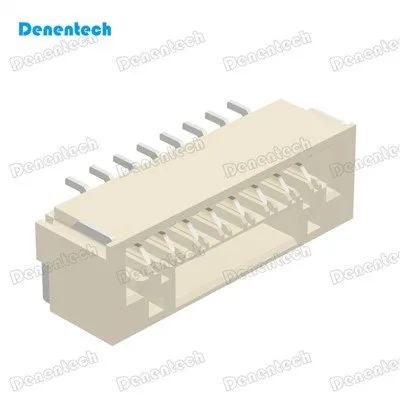
1.0mm Wafer Dual Row Right Angle SMT
Wafer connector usually refers to the connector base (seat) connector, which is usually assembled by metal parts and plastic parts. It is often used on PCB boards. Unlike Hosing, which only has plastic parts (some with iron shells), it is Assembled with wires and terminals.
04
2.0 Wafer Straight SMT With Lock
The 2.0 wafer straight SMT with lock socket connector is fixed on the electrical component through its square (circle) plate. The plug is generally connected to the cable, and the plug and socket are connected through the connecting nut.
Components of Wafer Header
Base
The base is the bottom part of the header and is generally made of ceramic or plastic. It provides a stable platform for the other components.
Pins or Terminals
These are the metal connectors that protrude from the base and provide a means for electrical connection between the header and the circuitry.
Insulating Material
The pins are surrounded by an insulating material, such as epoxy or silicone, to prevent electrical shorts and improve the stability of the header.
Sealant
A sealant is used to seal the header and provide protection against contaminants and moisture.
Alignment Markings
These are usually etched onto the base to help align the header with the circuitry.
Solder or Adhesive
Solder or adhesive is used to attach the header to the circuit board.
Wafer Header Features
Easy-to-Use Design
Wafer headers have a simple design that makes them easy to use and install. They often come with polarizing features that help to prevent misalignment during installation.
Contact pins
These headers have contact pins that connect to the PCB and ensure reliable communication between the PCB and other electronic components.
Mounting options
They come with a variety of mounting options, including surface mount (SMT), through-hole (THT), and press-fit connectors, making them suitable for different applications.
Pitch
Wafer headers are available in different pitch sizes, such as 2mm, 2.54mm, and 3mm, to fit various board layouts.
Number of contacts
They come in various contact configurations ranging from a few pins to more than 100 pins to support different application requirements.
Plating options
Wafer headers come with different plating options, such as gold, tin, and nickel, to support different applications, such as high-temperature environments.
Process of Wafer Header
Preparation of Materials
The first step in the wafer header process is the preparation of materials. The materials used in wafer header are usually ceramic, glass, or metal. These materials are selected based on their thermal, mechanical, and electrical properties.
Fabrication of Header
The fabrication of the header involves the creation of a cavity in the material. Different techniques are used for the fabrication of the header, such as drilling, milling, or punching. The cavity is designed to accommodate the electronic devices that will be mounted on the header.
Cleaning and Polishing
After the header is fabricated, it is cleaned and polished to remove any impurities and rough surfaces. This step is essential to ensure the header's surface is smooth and conducive to bonding with the electronic devices.
Mounting of Electronic Devices
The next step in the wafer header process is the mounting of electronic devices on the header. These devices are typically semiconductors, such as diodes or transistors. The devices are bonded to the header using different methods such as wire bonding or flip-chip bonding.
Encapsulation
Once the electronic devices are mounted on the header, the header is encapsulated with epoxy or some other protective material. This step protects the devices from mechanical damage, moisture, and other damaging factors.
Testing
The final step in the wafer header process is testing. The header is tested to ensure the electronic devices are functioning correctly, and the header's thermal, mechanical, and electrical properties are consistent with the specifications. The wafer header manufacturing process is complete once the header passes the testing phase.
Maintenance Tips for Wafer Header
Proper Cleaning: Regular cleaning ensures that the wafer header remains free of dust, debris, or other particles that may hinder its performance. Use a clean, lint-free cloth or a mild solution of water and isopropyl alcohol for cleaning.
Handling with Care: Wafer headers are fragile and must be handled with care. Always avoid dropping or bumping them during handling, which may result in cracking or impact damage.
Storage: Store the wafer headers in a dry and clean environment. Ensure that they are protected from any excess moisture, temperature extremes, and exposure to direct sunlight, which may damage the material.
Avoid Over-Tightening: Over-tightening the screws on the header can cause distorted threads or lead to breaking of the header, so avoid overtightening of screws.
Replace Damaged Parts: Examine the wafer header regularly and replace any worn or damaged parts immediately. Never use a damaged header in a system, as it may result in poor performance or lead to costly repairs.
Follow Manufacturer’s Guidelines: Follow the manufacturer's instructions for assembly, installation, and maintenance. Always consult the product manual for proper handling guidelines.
Regular Inspection: Inspect the wafer header regularly for any cracks, damage, or misalignment, and take the necessary corrective actions immediately.
Our Factory
Denentech Electronic Technology Co, ltd, established in 2003, Professional R&D and production experience of connectors. Has more than 3000 square meters. Specializes in manufacturer percision board to board.Wire to board connectors and cable, assemblies for connectors, for computer&perpheral devices.


Certificate

FAQ
Q: What is a wafer header?
Q: What are the benefits of using a wafer header?
Q: What are the different types of wafer header?
Q: What materials are wafer headers typically made from?
Q: What are the different configurations and sizes of wafer header?
Q: What factors should I consider when choosing a wafer header?
Q: What are some common applications for wafer headers?
Q: What is the pitch of a wafer header?
Q: What materials are used to make wafer headers?
Q: What are the benefits of using wafer headers?
Q: What are some common applications for wafer headers?
Q: Can wafer headers be customized to meet specific application needs?
Q: What types of Wafer Headers are available?
Q: How do I choose the right Wafer Header for my project?
Q: How do I install and remove Wafer Headers?
Q: What are some of the common applications of wafer connectors?
Q: What are some of the considerations when selecting a wafer connector?
Q: What are some of the maintenance and repair tips for wafer connectors?
Q: What are the applications of wafer connectors?
Q: What are the types of wafer connectors?
We're professional wafer header manufacturers and suppliers in China, specialized in providing high quality customized products. We warmly welcome you to wholesale high quality wafer header at competitive price from our factory. Contact us for more details.
wafer plastic header, High Speed Wire To Board Connector, wafer housing connector