

Why Choose Us
Professional Team
Professional R&D and production experience of connectors,Has already acquired ISO9001, ISO14001 international quality,environment and management system certificates.
Competitive Price
Our competitive pricing ensures that our customers get the best value for their money.trying to reduce costs and profits,and provide you with a good price.
Quality Control
For each process,we have strict inspection standards,and we always insist that quality is life.
Online Response
We will wait for your message within 24 hours. Thank you for your interest in our products.
What is Board To Board Connector
A board-to-board connector is a type of electronic connector that is used to connect two PCBs (Printed Circuit Boards) together. These connectors typically consist of male and female contacts that are designed to fit into each other. The male contacts are usually located on one PCB while the female contacts are located on the other. Board-to-board connectors are commonly used in electronic devices where there is a need to connect two or more PCBs together in order to provide additional functionality or to form a complete circuit.


Product Categories


High reliability
Board to board connectors are designed to provide high reliability and durability, which makes them ideal for high-speed data transfer and signal transmission applications.
Easy assembly
With its small size, the board to board connector allows for easy assembly and installation. It can be easily plugged and unplugged without the need for special tools or equipment.
Space-saving
Board to board connectors allow for a smaller overall system design by eliminating the need for wiring and cables.
Cost-effective
With its minimal components and easy assembly process, the board to board connector is an affordable solution for high-speed data transfer and signal transmission.
High-speed performance
Board to board connectors are capable of achieving high-speed data transfer and signal transmission up to 50Gbps, which makes them suitable for use in various applications like consumer electronics, medical devices, and automotive industries.
Versatility
Board to board connectors are available in various types and configurations, which makes them versatile and able to suit diverse applications and requirements.
What are the Applications of Board To Board Connector
Network communication
High-speed, high-power industry-standard board-to-board connectors provide interconnect solutions for a wide range of networking and storage applications.
Medical equipment
The rich and diverse product portfolio of the reliable and durable board-to-board interconnection, brings unlimited application prospects in the field of medical equipment.
Household appliances
A wide range of board-to-board connectors and interface products help engineers flexibly design innovative new household appliances.
Mobile devices
Board-to-board connectors provide a variety of miniature interconnect products with different performances, easily adapting to digital products, cameras, mobile phones, notebooks, tablet computers and other high-density devices.
Automotive and military industry
Board-to-board connectors offer various solutions from standard sealed or unsealed interconnect products to customized power and signal harnesses for motor vehicles and in-car entertainment.
Types of Board To Board Connector
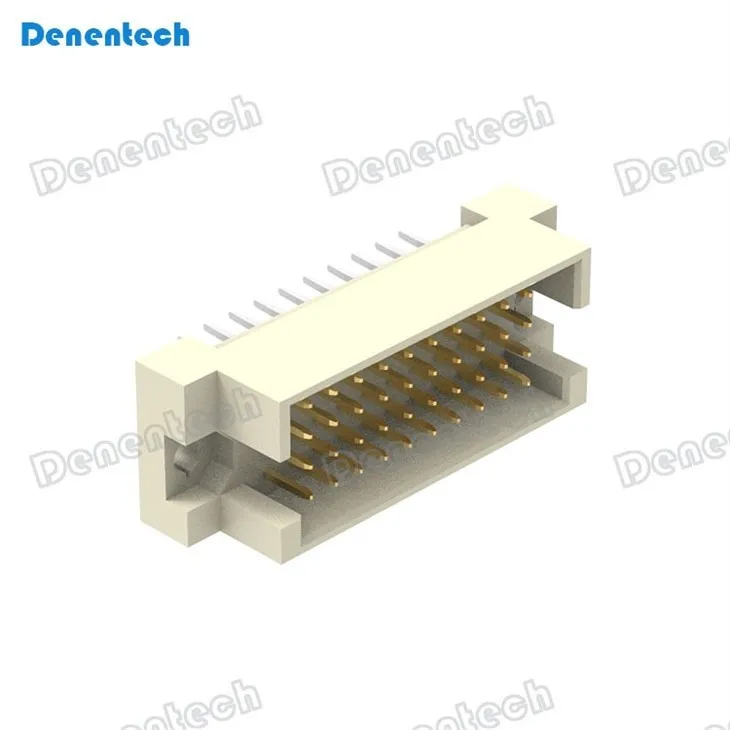
Pin headers
Most designers are familiar with the 1-row or 2-row pin header arrangement with 1 mm pitch. There are variations on this style, including stacked pin headers. Pin headers can be shrouded and keyed (even multi-keyed) to guarantee pinouts match when boards are connected.
Mezzanine connectors
This type of board-to-board connector joins two parallel printed circuit boards in a stacked configuration. There are many mezzanine connector styles. Note that a pin header can be used as a mezzanine connector.
Edge card connectors
This style connector is most commonly known for its use in RAM sticks and COMs/SoMs. Really, it can be used for any board-to-board connection along a board edge, whether with a custom or standardized pinout.
Backplane connectors
This type of connector deserves its own category, both due to its need to accommodate high data rates and very rugged construction.
Standardized connectors
Some connectors may be developed to meet very specific industry standards beyond edge connector styles for add-in cards. Standards organizations that have defined specific connector styles include VITA (for backplanes), PCI-SIG (PCIe cards), IEEE (e.g., 1386 standard for mezzanine), JTAG, PC/104 (square-post pin headers), and others.
Components of Board To Board Connector
Contact pads or pins
These are the metal pins or contact pads that help to establish electrical connections between the two boards.
Insulator body
This is the non-conductive material that separates the two boards and ensures that there is no unwanted electrical contact between them.
Locking mechanism
Most board-to-board connectors come with some kind of locking mechanism that secures the two boards together to prevent accidental disconnection.
Matting area
This is the part of the connector where the contact pads or pins from one board meet with the contact pads or pins from the other board.
Housing
This is the outer casing that helps to protect the connector from mechanical damage and keep it secure when installed in a larger system.
Shielding
Some board-to-board connectors come with shielding options to reduce electromagnetic interference (EMI) that can affect signal performance.
How to choose board-to-board connectors
Pitch and pin count: Unless you're designing to a specific application, or you need high speed/high frequency or high current, you'll probably start by looking at the pitch/pin count required in the connector. With low power and low speed signaling, just about every connector can handle your power requirements while ensuring signal integrity.
Power handling: This is normally quoted as current at a specific voltage per pin. Most connectors can handle a few Amps at typical application voltages. Make sure to check the voltage as it is common to supply both power and data through a cable; you'll want to make sure your power does not exceed the voltage rating.
Governing standard:Any industry standards on connectors can govern form factor (some examples are discussed above), or they can cover testing and application specifications. Make sure to check these to ensure your connector style will be compliant.
Environmental ratings:Specifications include power variations with humidity cycling, exposure to gases, and testing at high temperature. This gives you a good idea of where the connector can be used to ensure reliability.
Data rate/frequency limit: For high speed data channels, you'll see a recommended data rate limit, which the vendor will determine through extensive testing. Data rate limits are just a recommendation, and you might be able to get past these in your system. Be sure to test your system thoroughly if you plan to violate a data rate/frequency specification.
Mechanical specifications: High-quality board-to-board connector datasheets may include some data on mechanical shock, vibration, pulling force, or other specs that help a designer understand ruggedness. Note that these may be listed as test results meant to comply with some industry standard.
Form factor: Some board-to-board connectors (like edge connectors) can be rather bulky. Other connectors are specifically designed to have a low profile, such as the BM20 series of low-profile mezzanine connectors from Hirose. Watch out for the form factor and enclosure requirements in your system.
Process of Board To Board Connector

01
Stamping
The production process of board-to-board connectors generally begins with the stamping of the plug. Using a large high-speed stamping machine, the connector (plug) is stamped from a thin metal strip. The metal strip is fed into the front end of the stamping machine from a large coil, and the other end is pulled into a wheel through the hydraulic workbench of the stamping machine, which rolls up the stamped products.

02
Electroplating
After the pins of the connector are stamped, they must be sent to the electroplating section. At this stage, various metal coatings are plated onto the electronic contact surfaces of the connector. Similar issues encountered in the stamping stage, such as pin distortion, breakage, or deformation, can also occur during the process of feeding the stamped pins into the electroplating equipment, making it relatively easy to detect quality defects.
03
Injection Molding
The plastic housing of the electronic connector is made during the injection molding stage. Typically, molten plastic is injected into a metal mold and then rapidly cooled to form the desired shape. A typical defect that needs to be detected during the injection molding stage is the incomplete filling of the molten plastic into the mold. Other defects include fillings that completely or partially block the insertion holes (these insertion holes must remain clean and unobstructed for proper insertion of pins during final assembly). Machine vision systems are relatively simple and feasible for quality inspection after injection molding, as defects such as leaking in the housing and blockage in the insertion holes can be easily identified via backlighting.

04
Assembly
The final stage of manufacturing electronic connectors is the assembly of finished products. There are two methods for inserting the electroplated pins into the injection-molded housing: individual insertion or simultaneous insertion. Individual insertion refers to inserting one pin at a time, while simultaneous insertion involves inserting multiple pins into the housing at once. Regardless of the insertion method used, manufacturers require that all pins be checked for completeness, and proper positioning, and another routine inspection task relates to measuring the spacing on the mating surface of the connector.
Maintenance Tips for Board To Board Connector
●Regular Cleaning
One of the most fundamental maintenance tasks for Board to board connector is regular cleaning. Over time, connectors can accumulate dust, dirt, and other contaminants, hindering their performance.
●Proper Inspection
Regular inspections are crucial to identify any signs of wear, corrosion, or damage in Board to board connector. These inspections can help detect potential issues before they lead to system failures or safety hazards. Here are some essential inspection practices Inspect connector pins, sockets, and contacts for any signs of physical damage, such as bent pins or loose contacts. Replace damaged connectors promptly.
●Proper Storage
Proper storage is crucial to maintain the integrity of Board to board connector, especially when they are not in use. Here are some key considerationsStore connectors in a clean and dry environment, away from moisture, dust, and extreme temperatures.Use protective caps or covers to prevent dirt or debris from entering the connectors when they are not connected to a system.Avoid storing connectors in a tightly coiled or twisted state, as it can cause stress on the cables and connectors.
●Follow Manufacturer Guidelines
Always refer to the manufacturer's guidelines and recommendations for maintenance procedures specific to the Board to board connector you are using. Different connectors may have unique cleaning, inspection, or testing requirements. Adhering to these guidelines ensures that you are following the best practices and maximizing the connectors' lifespan.
Our Factory
Denentech Electronic Technology Co, ltd, established in 2003, Professional R&D and production experience of connectors. Has more than 3000 square meters. Specializes in manufacturer percision board to board.Wire to board connectors and cable, assemblies for connectors, for computer&perpheral devices.


Certificate

FAQ
Q: What is a board-to-board connector?
Q: What are the benefits of using board-to-board connectors?
Q: What types of board-to-board connectors are available?
Q: What factors should be considered when selecting a board-to-board connector?
Q: Can board-to-board connectors be used in harsh environments?
Q: What are some common applications for board-to-board connectors?
Q: How do I ensure proper mating and alignment of board-to-board connectors?
Q: Can board-to-board connectors be customized for specific applications?
Q: What are some best practices for working with board to board connectors?
Q: Are there size or space constraints? Miniature Connectors
Q: What is the function of board to board connector?
Q: How do I choose a PCB connector?
Q: What is board mount connectors?
Q: How do I identify a PCB connector?
Q: What is an SMT connector?
Q: How do board-to-board connectors work?
Q: What are the applications of board-to-board connectors?
Q: Which of these is used to have connections between layers of PCB?
Q: What is B2B process?
Q: How do you remove a wire from a board connector?
We're professional board to board connector manufacturers and suppliers in China, specialized in providing high quality customized products. We warmly welcome you to wholesale high quality board to board connector at competitive price from our factory. Contact us for more details.
Ejector Header SMT Type, pogo pin elastic contact, magnetic pogo pin