

Why Choose Us
Professional Team
Professional R&D and production experience of connectors,Has already acquired ISO9001, ISO14001 international quality,environment and management system certificates.
Competitive Price
Our competitive pricing ensures that our customers get the best value for their money.trying to reduce costs and profits,and provide you with a good price.
Quality Control
For each process,we have strict inspection standards,and we always insist that quality is life.
Online Response
We will wait for your message within 24 hours. Thank you for your interest in our products.
What is Pogo Pin
Pogo pin is a type of spring-loaded contact pin used for electrical connections. It consists of a plunger mechanism enclosed in a metal tube, and a spring that provides the required pressure to make the electrical contact. Pogo pins are commonly used in electronic devices, such as mobile phones, tablets, and electronic components where a reliable and low-profile connection is required. They are also used in test and measurement applications where the contacts need to be interchangeable and easy to replace. Pogo pins are known for their durability, long life, and ability to withstand harsh environments.
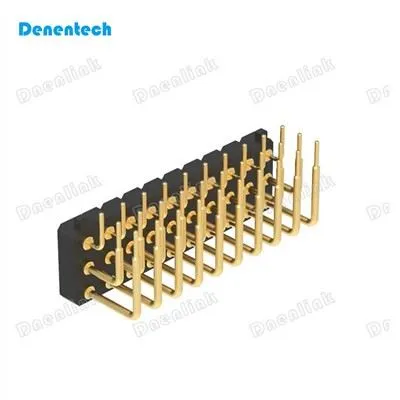


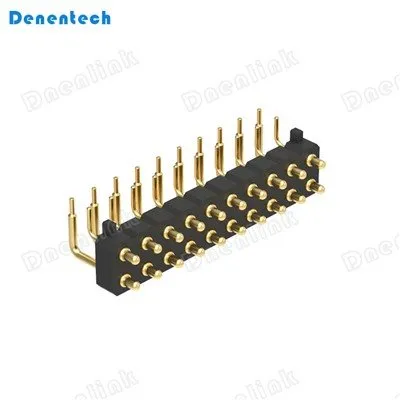


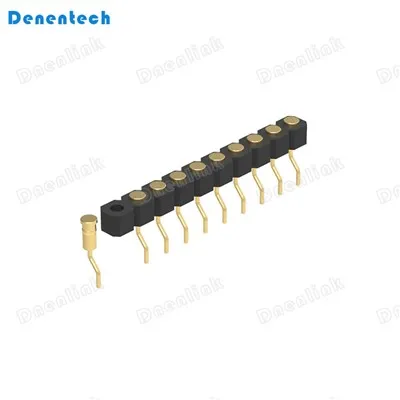


Product Categories


Benefits of Pogo Pin
The reliability of the contact is good
Compared with shrapnel connectors of the same size, pogo pin connectors have greater compression and more stable contact. When subjected to strong external force, the spring pressure of pogo pin connectors changes relatively small.
It can effectively save the space of the PCB board
Under the same amount of compression, the pogo pin connector takes up less space than the spring connector.
The contact point is more stable
The contact point of the pogo pin connector does not move when it is compressed, while the shrapnel connector will move relatively. The stable contact point can allow the product to obtain stable electrical performance and better play the product's performance.
Longer service life
The pogo pin connector can be retracted at least 10,000 times, and the pogo pin connector with better quality can be retracted more than 100,000 times, which also makes the product life longer.
The production speed is fast and the cost is low.
The pogo pin connector does not require mold opening and stamping, and the time for sample development and mass production is short, so the pogo pin connector is the most economical and fastest way to choose a connector.
Simple Assembly Connection
The assembly is one of the key factors to consider when designing a device. If the manufacturer goes for manual connectors, it can take much money and human effort. But with a pogo pin connector, it takes less time to assemble a board-to-board connector since manual alignment is not involved.
Stable Current
Pogo pins are designed in such a manner as to offer a steady current flow for the efficient operation of electronic devices. A stable current flow is made possible by the high spring force that makes the plunger easily press against the barrel wall.
Low Cost
Instead of molding, pogo pins are made using the turning process. This method produces cost-efficient connectors by spinning a round piece of metal at high speed without using additional tools or materials.
What are the Applications of Pogo Pin
Test Fixtures in Electronics Manufacturing
Pogo pins play a crucial role in electronics manufacturing by being an integral part of test fixtures. These pins facilitate quick and dependable connections when testing different aspects of printed circuit boards (PCBs). This ensures effective quality control and a thorough assessment of PCB functionality before finalising the production process.
Docking Stations for Devices
Pogo pins are essential in docking stations designed for devices like smartphones and laptops. These pins serve as connectors that enable seamless power and data transfer between the docking station and the device itself. This streamlined connection process ensures efficient charging and smooth data synchronisation between the two entities.
Medical Device Applications
Pogo pins find valuable use in the medical field, particularly in medical devices where consistent and reliable connections are paramount. Such devices include patient monitoring equipment and diagnostic tools. The reliable connections facilitated by pogo pins contribute to accurate data transmission and overall device performance.
Automotive Industry Uses
Pogo pins serve various functions within the automotive sector, ranging from diagnostics in service centres to programming electronic control units (ECUs) during vehicle assembly. These pins enable efficient and accurate connections, ensuring that tasks such as vehicle diagnostics and ECU programming are carried out with precision and reliability.
Types of Pogo Pin
SMT/SMD pogo pins: SMT (surface-mount technology) and SMD (surface-mount device) pogo pins are similar to standard pogo pins but have a smaller body that can be mounted directly onto a PCB.
Through-hole pogo pins: Through-hole pogo pins are similar to standard pogo pins but have a longer body that extends through the holes in a PCB. This allows the pogo pin to be soldered directly to a PCB without the need for a separate soldering step. Through-hole pogo pins are typically used in applications where space is not a concern, such as in heavy-duty industrial applications.
Double-ended pogo pins: Double-ended pogo pins have a metal contact on both ends of the pin. This allows the pogo pin to be used in applications where two electrical connections need to be made, such as in test fixtures.
High-current pogo pins: High-current pogo pins are designed to carry larger currents than standard pogo pins. They are therefore suitable for high-current applications like power supplies and charging stations.
Right-Angle pogo pins: Right-angle pogo pins are similar to standard pogo pins but have a right-angle bend in the middle of the pin. This makes it possible for the pogo pin to be flush with the PCB surface. Right-angle pogo pins are typically used in applications where space is limited, such as in cell phones and other handheld devices.
Bending-type pogo pins: Bending-type pogo pins are similar to standard pogo pins but can be bent into different shapes. Because of this, the pogo pin may be used in small spaces, such as mobile phones and other portable gadgets.
Solder Cup pogo pins: Solder-cup pogo pins are similar to dip pogo pins, but they have a small cup on the end of the pin that can be filled with solder. This allows the pogo pin to be soldered directly to a PCB without the need for a separate soldering step.
Thread screw pogo pins: Thread screw pogo pins are similar to standard pogo pins but have a threaded body that can be screwed into place. This allows the Pogo pin to be used in applications where a secure connection is needed.
Components of Pogo Pin

01
Housing
Serving as the external shell, the housing encapsulates and protects all internal components of the pogo pin. This structural element ensures mechanical resilience and stability in various applications.

02
Spring Mechanism
The core mechanism of the pogo pin lies in its spring mechanism. Central to this mechanism is a coiled spring, made from a conductive material to facilitate electrical connectivity. This spring can undergo both compression and extension, providing the pogo pin with its distinctive functionality.

03
Plunger
The plunger is the dynamic portion of the pogo pin, responsible for extending and retracting. It remains interconnected with the coiled spring and operates within the confines of the housing. The plunger's movement is facilitated by the spring's elasticity.

04
Tip
At the end of the plunger is the tip. This tip constitutes the point of contact responsible for establishing an electrical connection with another surface or component. The tip's design and material contribute to efficient and reliable electrical conductivity.
Initial State
In its resting state, the pogo pin assumes a configuration where the spring mechanism is in an extended position. This configuration positions the tip away from its intended contact point, ensuring no electrical connection is established.
External Force Application
Upon applying an external force to the tip of the pogo pin, this force is transmitted through the plunger. The plunger, in turn, compresses the coiled spring residing within the pin's housing. This forceful compression is possible due to the spring's inherent flexibility and resilience.
Spring Compression
As the spring compresses, it accumulates potential energy within its coils. This energy is a result of the deformation of the spring from its original extended configuration. The spring's conductive nature ensures electrical continuity during this compression phase.
Potential Energy Storage
The compressed spring stores this potential energy within its coiled structure. This energy is ready to be harnessed for the subsequent stages of the pogo pin's operation.
Release and Retraction
When the external force is either diminished or eliminated, the spring within the pogo pin resumes its relaxed state. Consequently, the plunger retracts, causing the tip of the pin to disengage from the targeted surface. This orchestrated disconnection is vital, as it averts the risk of accidental short circuits and preserves the integrity of the overall connection interface.
Pogo Pin Material
Common materials for Pogo Pin, the cost of brass is relatively low, beryllium copper has excellent electronic properties and low impedance. Phosphor bronze is selected for the use of some high-frequency signal transmission products. Usually the barrel is not heat treated because the barrel needs to be bent during the assembly. Selective quenching is an option, but it will affect the cost of the whole product.
Common materials for Pogo Pin ,the basic material selection is similar to that of the barrel. The only difference is that the plunger can be made of materials with ultra-high hardness, such as SK4, we choose it as the plunger because it has better hardness and is also conducive to turning processing, it is a good option for plunger head protection, it requires heat treatment to achieve a hard structure and maintain the integrity of the tip. All above materials can be CNC, cam machine turning.
Common materials for Pogo Pin spring, SUS304 is the most comprehensive cost-effective, and under the same specifications, the comprehensive performance of elasticity and life is the highest. Carbon steel wire (piano wire) have the highest elasticity under the same specifications, but the life is short. Beryllium copper wire has the highest life under the same specifications, but the elasticity is the smallest.
Maintenance Tips for Pogo Pin
Ensure proper storage process
In the usual storage process, you must ensure the appropriate indoor temperature and humidity. High temperature or high humidity will have a certain impact on it. Do not store the pogo pin. In addition, some chemicals may corrode and lose it. The outer layer protects, causes certain damages, and uses to influence the function.
Second, avoid contact with hard objects
When moving or moving, avoid contacting the connector with hard objects to avoid scratching the connector. Do not place the product under heavy objects when stacking, so as not to crush the connectors.
Third, pay attention to the problem of use
It is also necessary to pay attention to the problems in use, in order to better extend the service life of the connector, the battery contact plate or the FPC golden finger connector must not have dirt, oxidation, and other dirt, residual hole sealing liquid, and residue, etc. Keep the surface clean and tidy.
Storing
Proper storage is also essential to ensure the longevity and optimal performance of your Pogo Pins. Here's how to store your Pogo Pins:Select an area that is not only secure and reliable but also remains at a stable temperature and is free from moisture to ward off any corrosion damage.Secure in a way that prevents bending or twisting of the spring or metal contacts.
Our Factory
Denentech Electronic Technology Co, ltd, established in 2003, Professional R&D and production experience of connectors. Has more than 3000 square meters. Specializes in manufacturer percision board to board.Wire to board connectors and cable, assemblies for connectors, for computer&perpheral devices.


Certificate

FAQ
Q: Why You Should Pogo Pins Over Traditional Connectors?
Q: How to maintain or store the pogo pin?
Q: How to Connect and Disconnect Pogo Pins Safely?
Q: What is pogo pin used for?
Q: How long do pogo pins last?
Q: Are pogo pins reliable?
Q: Are pogo pins waterproof?
Q: How are pogo pins installed?
Q: Why is my pogo pin not working?
Q: What is the temperature of pogo pin?
Q: What does pogo pin stand for?
Q: How are pogo pins made?
Q: How do you select the right pogo pin for an application?
Q: What is the maximum current rating of a pogo pin?
Q: What are the advantages of pogo pins?
Q: How durable are pogo pins?
Q: What are the parts of a pogo pin?
Q: Can you solder pogo pins?
Q: What is Pogo made of?
Q: How are pogo pins mounted?
We're professional pogo pin manufacturers and suppliers in China, specialized in providing high quality customized products. We warmly welcome you to wholesale high quality pogo pin at competitive price from our factory. Contact us for more details.
pin SATA connector solder, 1 0mm Single Row Straight U Type DIP, Dell Laptop Sata Hard Drive Connector